
Algebra!
Join us in this step-by-step guide through the wonderful world of x's and y's, equations and operations, as we uncover the mysteries of Algebra.
Algebraic Terminology
Let's begin with the basic terminology.
Variable / Pronumeral
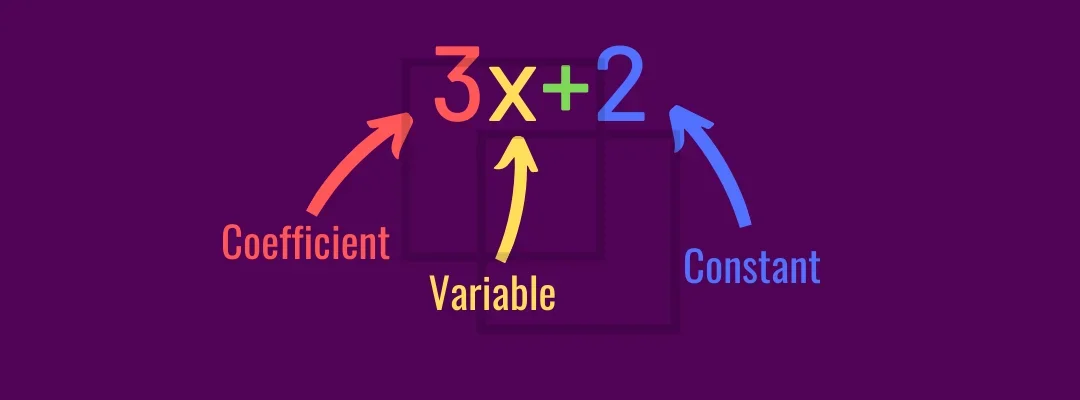
These are the x's and y's, something which we don't know the value of yet. The goal of algebra is generally to solve for these variables.
Coefficient
The number which is out the front of a variable, i.e. the number which is multiplied by the variable.
Constant
The number which is on its own, and doesn't impact the variable.
Term
Any combination of a coefficient and a variable.
"If I had a dollar for every time Algebra has helped me, I'd have x dollars."
Algebra: Basic Operations
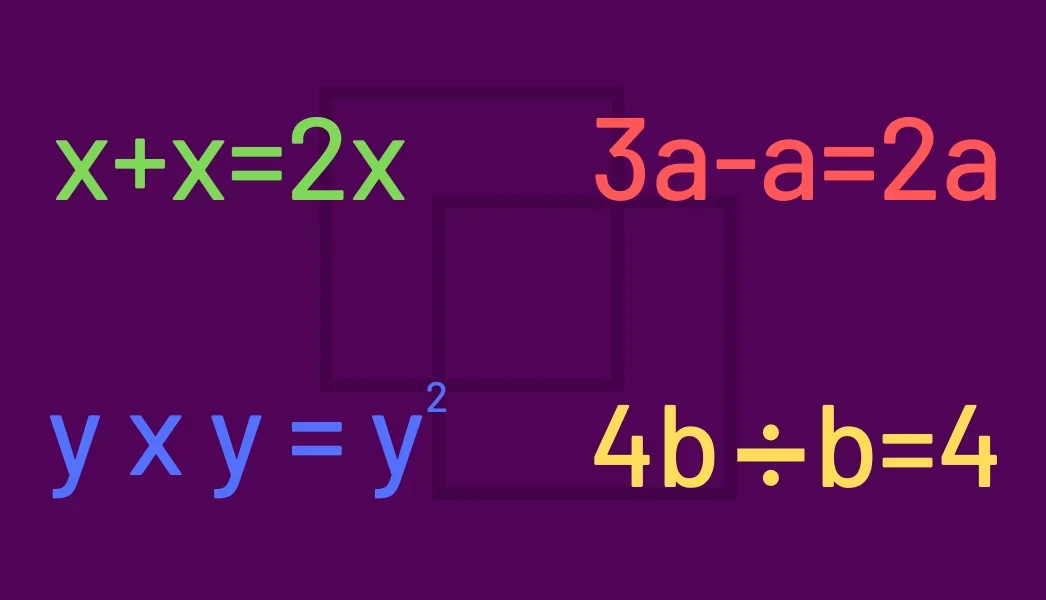
Just like how we can use operations on numbers, we can add, subtract, multiply, and divide variables as well.
Collecting Like Terms
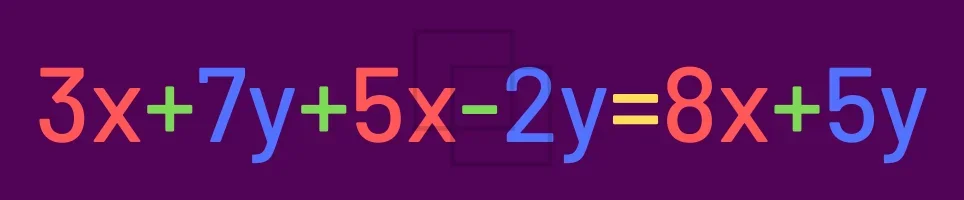
To make our expressions smaller, we can sometimes collect like terms. These are terms which only differ by the coefficient.
Solving Algebraic Equations
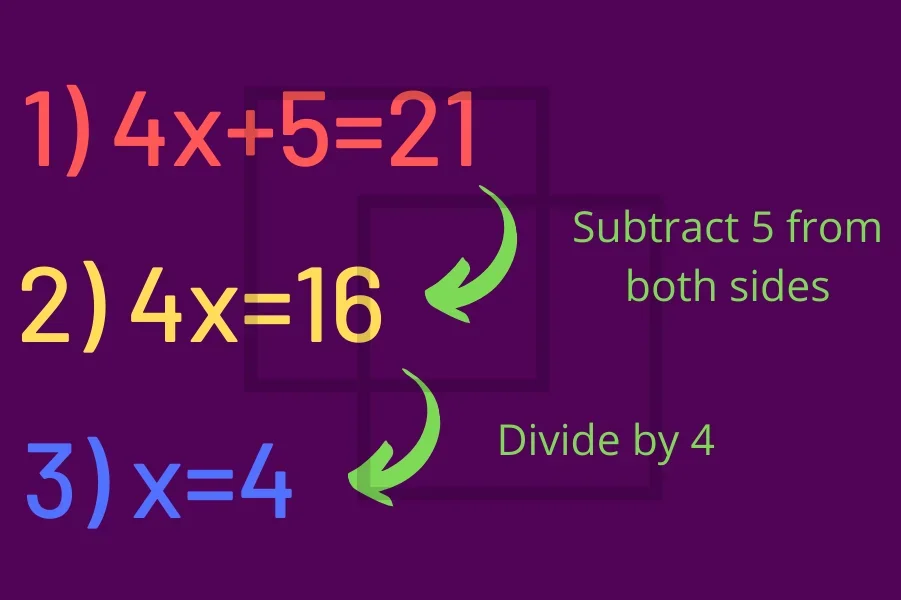
We can now start to solve equations with the rules we've just learnt. The point of these equations is to find the value of the variable.
Method of solving equations
- Move the constants
Move the constant terms to the right-hand side of the equation.
- Divide by the coefficient
Divide both sides by the coefficient to leave the variable by itself.
"Finding a treasure is like working on algebraic equations, all you have to do is find the X."
Introduction to the Quadratic
The next step of our journey into the world of algebra is the quadratic, which is something you'll see over and over in your high school maths classes. A quadratic is an expression which contains an x2 (x squared) term with no higher powers.
All quadratics have the following form, where a and b are both coefficients, and c is a constant.

Some Examples of Quadratics
Not all quadratics look the same. The only real identifier of a quadratic is that the highest power of x is 2.
x2 + 5x + 4
This is very much a quadratic, it contains an x squared term.
x2 – 9
This is also a quadratic, just with the b coefficient equal to 0.
x2
This example is still a quadratic, even though it only contains one term. The only difference here is both the b coefficient and c constant are equal to 0.
(x+1)2
This looks different from the others since we can't see any obvious x2 term. However, as we'll discuss further on in this resource, this is still a quadratic expression.
Want to know what a quadratic looks like? Visit our free Graphing Resource to find out!
Expanding and Factorising Brackets
In order to solve quadratics, we need to know how to expand and factorise brackets.
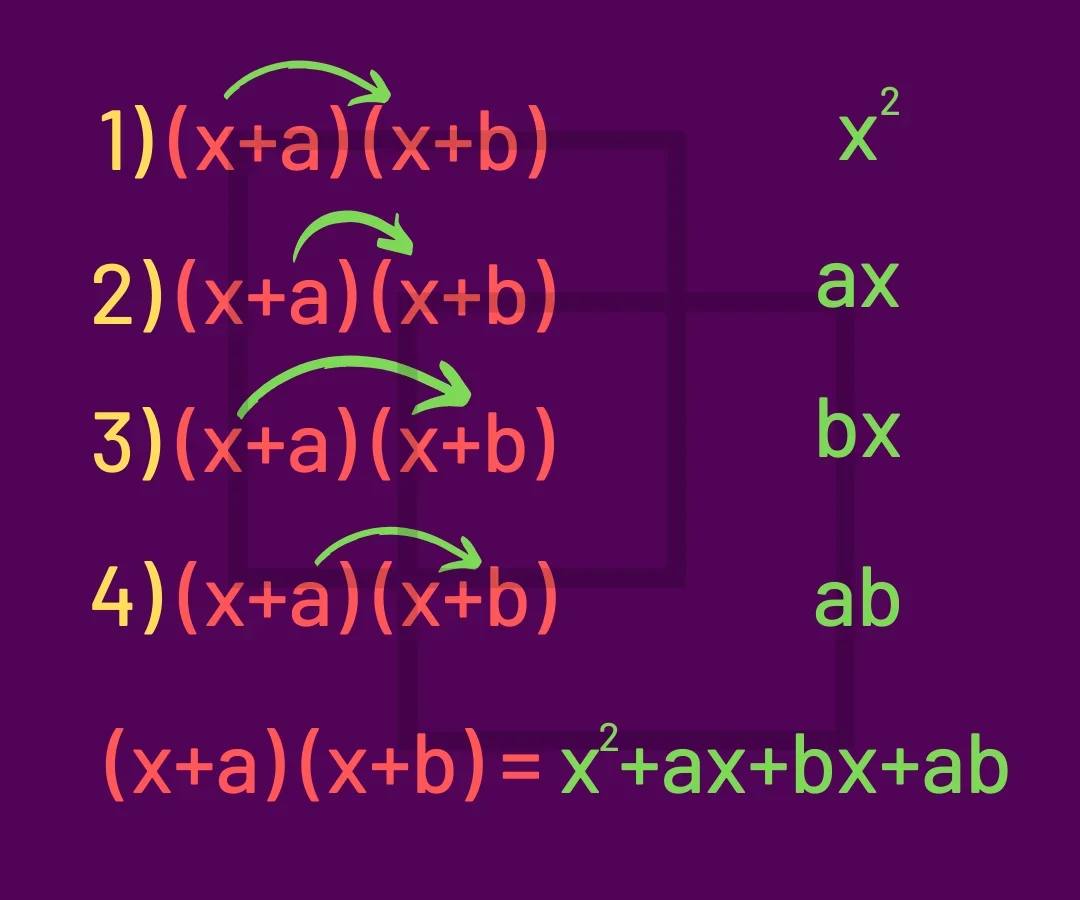
If we have two brackets, each containing an x term, we may want to expand these brackets into a single quadratic. To expand, follow these 4 steps.
To reverse this process is called factorising. Let's consider the example below, 3x2 + 5x + 2.
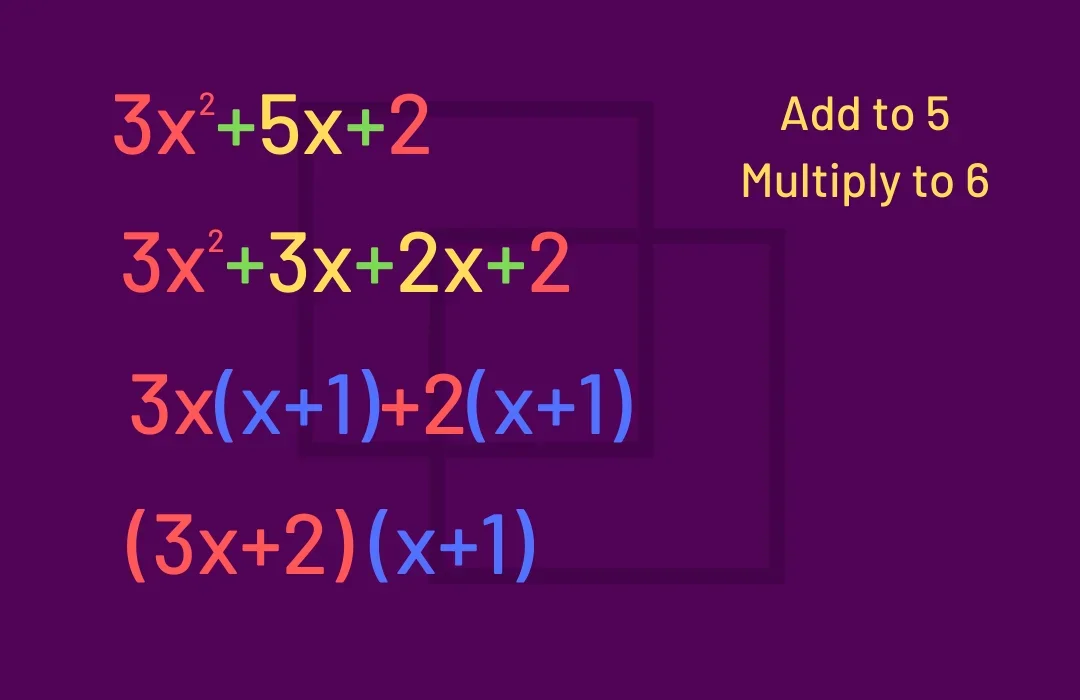
- Multiply the a coefficient by the constant c (in our case 3 × 2).
- Find two numbers which add to the b coefficient (5) and multiply to our product ac (6). In our case, this would be 3 and 2.
- Split the b term up into a sum containing these two numbers.
- Take out any common terms that appear. In our case, the first two terms both contain a 3x and the second two terms both contain a 2.
- Join these two terms as shown to give a factorised form.
Not all quadratics can be factorised!
Sometimes you'll come across a quadratic that no matter how hard you try, you can't seem to factorise it. Don't stress, it's probably because it can't be done!
Special Quadratics
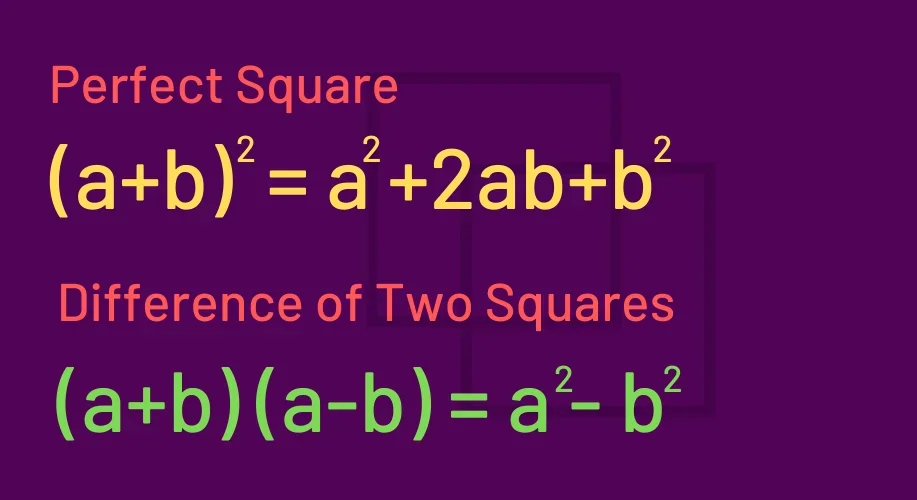
Perfect Squares and Difference of Two Squares
The perfect square and difference of two squares are special because they can be factorised easily without going through the tedious process shown above.
Solving Quadratic Equations
Now that we know what a quadratic is and how to factorise, we can start to solve them.
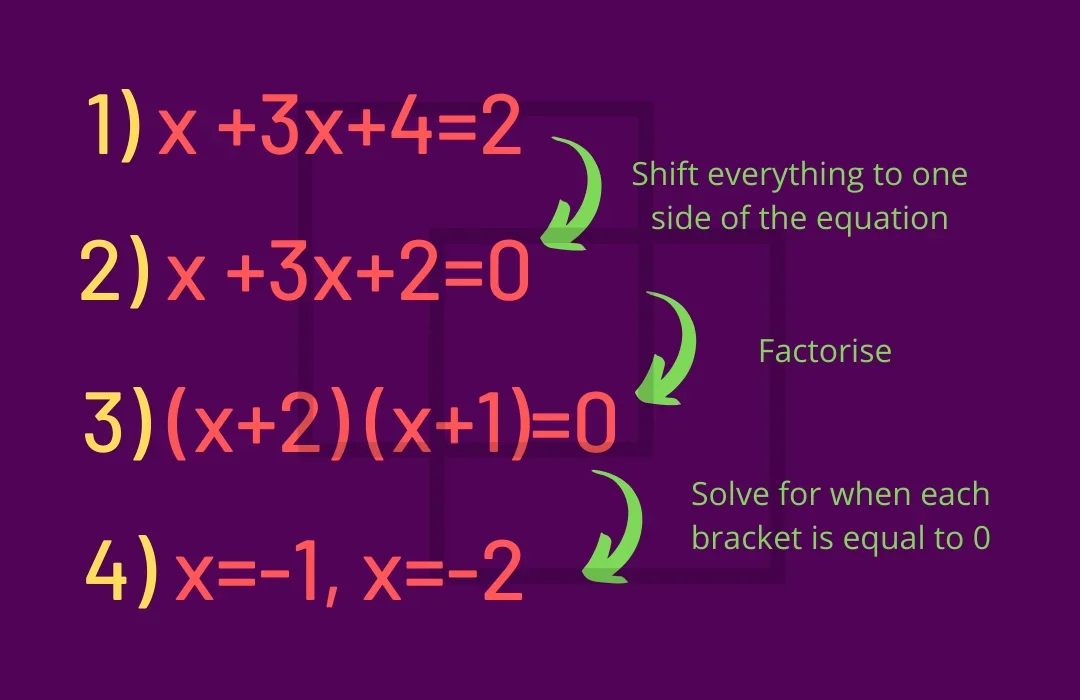
- Shift
Shift everything to one side of the equation to give a quadratic on the left-hand side and 0 on the right-hand side.
- Factorise
Factorise the quadratic (if it is impossible to factorise, then we say that this equation has no solutions).
- Solve
Solve the equation by determining what values of x make each bracket equal to 0.
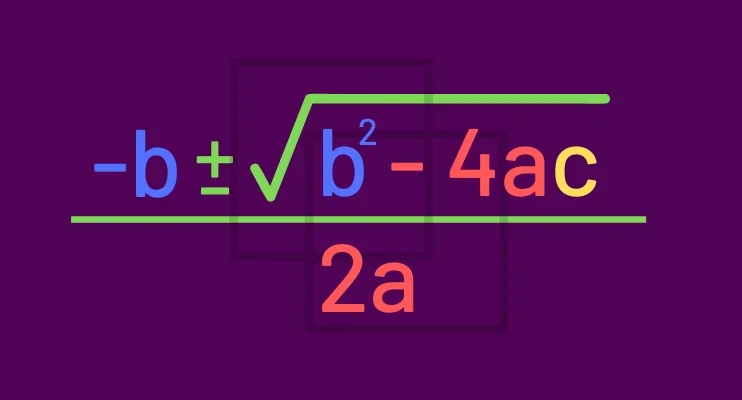
Sometimes it can be difficult to factorise a quadratic in order to solve it. In this case, we use the trusty quadratic formula.
Now don't start to panic, the quadratic formula may seem daunting, but it will become your best friend in years to come!
The solutions to any quadratic will be given by substituting in the coefficients a, b, and the constant c into this formula.
Still Struggling with Algebra?
Sometimes the internet just isn't enough and you really do need a mentor to guide you in person.
Smart Space offers in person lessons with engaging tutors. Maybe we can help you. Take a look at our Maths courses or book a free trial below.